
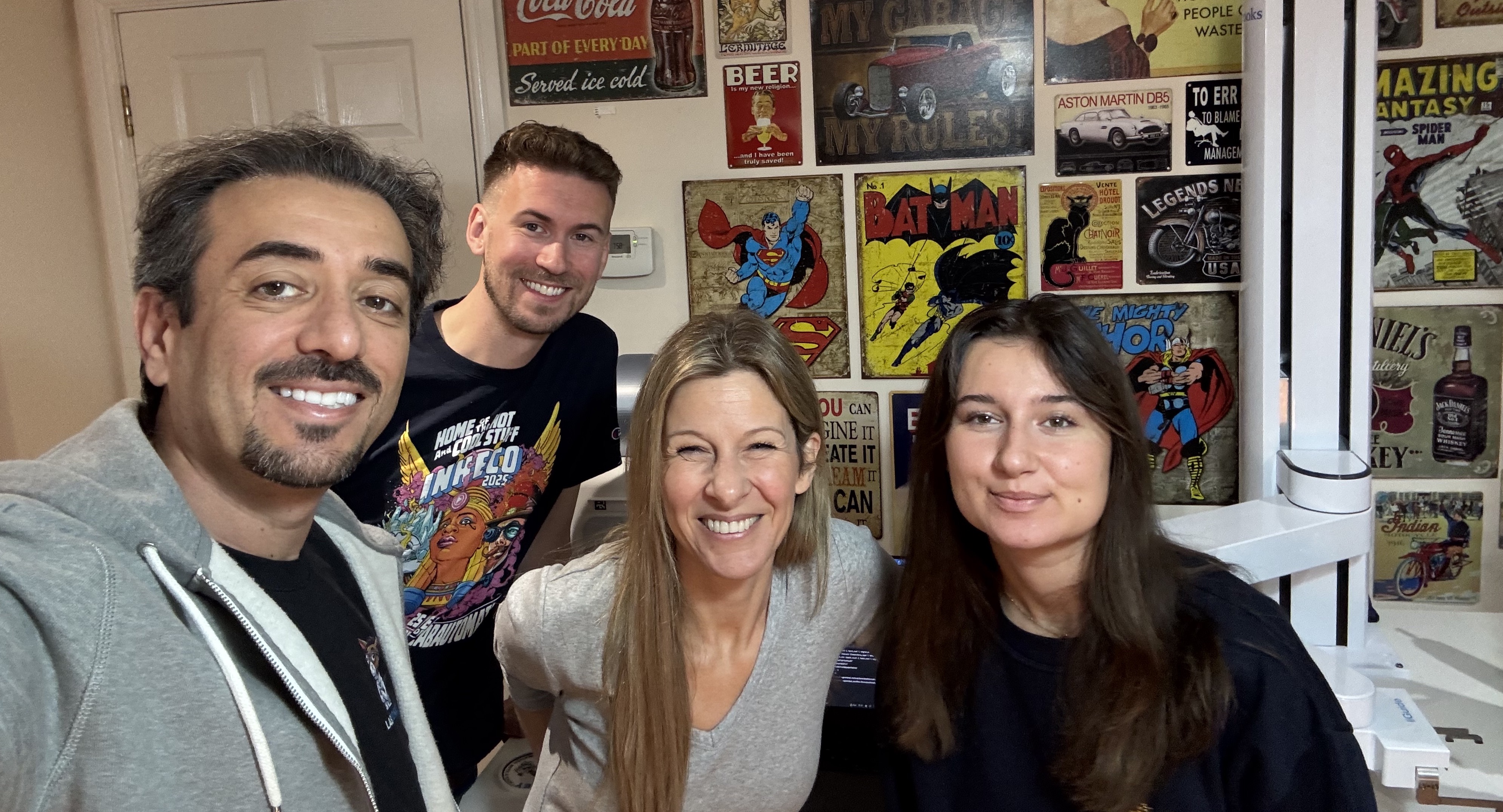
After 30 years of software development across industries such as flight and nuclear power plant simulation, finance, education, healthcare, and AI, I thought I had seen it all. However, two years ago, consulting for a lab automation company introduced me to a new frontier—one where the challenges were unlike anything I had faced before. It wasn't just me on this journey; my partner, Petia, has been by my side every step of the way. If it weren't for those meddling kids at home, she would be here with me today, showcasing the work we've built together.
Why Lab Automation?
Lab automation software is at a fascinating crossroads. Many systems rely on foundations developed 15–20 years ago. While they've evolved, they carry legacy baggage that limits flexibility. What's more, every lab is unique, with its own workflows and challenges. Cookie-cutter solutions simply don't work here. For problem-solvers like Petia Hak and me, the complexity of creating flexible, scalable, and future-proof software for labs was irresistible.
The real challenge isn't cloud scalability or authentication—those are well understood. What excites us is solving the fundamental problem of clearly and effectively defining and running workflows. This is the foundation for successful lab automation integration, and it's where Lab Donkey shines.
The Vision for Lab Donkey
We're building an open platform (not open source) that empowers labs and integrators with adaptable and flexible software. Whether it's enabling real-time debugging or injecting custom code for unique workflows, we refuse to be the bottleneck. Our philosophy is simple: let labs and integrators focus on their expertise while we focus on building the tools they need to solve problems quickly.
We built Lab Donkey to say, "Yes, we can do that," without making users wait for the next versions. By allowing code injection at any level, we're giving users the power to adapt Lab Donkey to their needs on the fly while we refine and roll out broader features later. Flexibility isn't just a feature—it's our core philosophy.
Lessons from SLAS 2024
Attending SLAS 2024 confirmed our approach. I saw innovative solutions but also the limits of legacy systems. The biggest takeaway was the opportunity to build software that blends cutting-edge technology with thoughtful design. Lab automation isn't about cramming in more features; it's about defining workflows clearly and making integrations easier for everyone.
The Road to SLAS 2025
After just 120 days of development, Petia and I unveiled our MVP to industry veterans like David Dambman and Jon Newman-Smith. Their feedback validated our approach, and their enthusiasm fueled us to refine the software further. Over the last few months, I've had the privilege of working closely with the Lab Sync team—David Dambman, Steve Testen, Jeffrey Martin, and Imad Mansour—at their lab in San Diego. Their combined experience, spanning decades, has been an incredible resource. The insights and feedback I've gained from them have been invaluable in shaping Lab Donkey.
The Backbone of it All
None of this would have been possible without Petia. While I spent months in San Diego immersed in development, she's been doing double duty—working on Lab Donkey seven days a week and taking care of the family. Petia and I have worked together as partners for years, raising kids and building companies and software side by side. Her dedication, resilience, and ability to manage it all are what make this journey possible.
What's Next?
As we head to SLAS 2025, we're excited to showcase Lab Donkey alongside LabSync. Our software isn't perfect yet—no software is—but it's on the right path. It's been tested in real-world projects, and we're eager to see how the industry reacts. The ultimate goal? To redefine lab automation, partnering with innovators, instrument manufacturers and integrators to solve the industry's toughest challenges.
Let's (donkey) kick it!